Winggo Soft

News Website Development Cost in India 2026

The way people get their news has changed a lot. In the past people relied mostly on newspapers and TV to stay informed. Now they turn to smartphones, search engines, social media, websites and mobile apps to read news anytime anywhere. This shift has made it necessary for traditional newspapers, media companies, independent publishers, local journalists and new digital brands to move online. They are. Upgrading their presence on the web to keep up with how people want to consume information. When they start this process, one of the things they ask is: “What is the news website development cost in India?” There isn’t a single price that fits all. A basic news website with a few features—like publishing articles and showing headlines—will cost much less than a full-featured platform. The advanced the website, the higher the cost. For example a simple site may only include content posting.. If you want features, like advanced search, multiple authors, ads, analytics tools, video integration, e-paper access, user accounts and a strong admin panel the development will be more complex and expensive. So the final cost depends heavily on what kind of news website someone wants to build. What Is a News Website? A news website is an online platform where publishers can create, manage, publish, and distribute news content. Unlike a simple business website, a news platform normally requires a content management system. Editors and authors should be able to add articles without changing the website code. A professional news website may include: The exact requirements depend on the size and type of publication. A local news website may need a simpler system, while a large digital publisher may need a custom platform with multiple authors, editors, regional editions, video publishing, advertisements, and advanced reporting. How Much Does News Website Development Cost in India? The cost depends on the development approach and required functionality. A rough planning range can look like this: Type of News Website Approximate Cost in India Basic news website ₹25,000 – ₹60,000 Professional news website ₹60,000 – ₹1,50,000 Custom news portal ₹1,50,000 – ₹4,00,000+ Advanced news platform ₹4,00,000 – ₹10,00,000+ Enterprise-level news platform ₹10,00,000+ These are planning ranges, not fixed market rates. Actual quotations can vary significantly depending on design, technology, content migration, integrations, hosting, security, development team, and custom functionality. Current Indian website-cost guides similarly show that scope and functionality have a major effect on the final price. For example, a website using an existing theme with basic publishing may cost much less than a platform designed and developed completely from scratch. What Affects News Website Development Cost? Several factors influence the final cost. 1. Website Design Design is one of the first factors to consider. A basic template-based website can be developed faster. However, a custom-designed news platform requires more UI/UX planning. A custom design may include: The more customized the design, the more development time is usually required. A modern news website should also be easy to scan. Readers should quickly understand what is breaking, what is trending, and what is most important. 2. Content Management System A professional news website needs a reliable content management system. The CMS should allow administrators and editors to: For a growing publication, the CMS becomes one of the most important parts of the website. A custom CMS can increase development cost because developers need to build the functionality according to the publisher’s workflow. 3. Number of Categories A small local publication may have only a few categories. For example: A larger publication may have many categories and subcategories. For example: India World Sports As categories and subcategories increase, the CMS and navigation structure may require more planning. 4. Author and Editor Management If several people are publishing content, the website may need role-based access. For example: Admin Can manage the entire website. Editor Can review and manage articles. Author Can create and manage their own articles. Reporter Can submit news stories. This type of permission system is especially useful for newspapers and professional digital publishers. A custom role-management system can increase the overall development effort. 5. Search Functionality Search is an important feature for a news website because the number of articles can grow quickly. A good search system should allow readers to find: For larger websites, advanced search and filtering can require additional development. 6. Mobile Responsive Design A large percentage of online readers access websites from smartphones. Therefore, a news website should work properly on: The layout should automatically adjust to different screen sizes. Mobile optimization should cover menus, article text, images, advertisements, videos, buttons, search and navigation. Responsive design is not just about making the desktop website smaller. The mobile user experience should be planned separately. 7. Advertisement Management Advertising is an important revenue source for many publishers. Instead of manually adding advertisements to every article, an admin panel can provide advertisement management. For example, administrators can manage: A good advertisement system can also allow administrators to set where an advertisement should appear. This can make content management easier and reduce the need for technical changes. 8. SEO Features SEO is particularly important for a news website because publishers want articles to appear in search results. A professional platform should allow editors to manage: Technical SEO should also be considered during development. A website that loads quickly and has a clean structure gives search engines a better technical environment for crawling and indexing. 9. Image and Video Management Modern news publishing is not limited to text. Publishers may use: A professional platform should make media management simple. For example, editors should be able to upload an image while creating an article and select it as the featured image. If the website publishes large numbers of images and videos, storage and hosting requirements can also increase. 10. Social Media Integration Social media can help publishers distribute articles to their audience. A news website can include sharing options for platforms such as: Social sharing buttons are usually straightforward, but automated social publishing or third-party integrations may

News Website Development Cost in India 2026 Read More »

News Content Management System: A Complete Guide for Modern Publishers

News Content Management System: A Complete Guide for Modern Publishers The way people consume news has changed dramatically. Today, readers expect news websites to deliver fresh stories quickly, provide accurate information, and offer a smooth experience across desktop and mobile devices. For publishers, managing this growing amount of content can become challenging. Editors need to create articles, journalists need to submit stories, administrators need to manage users, and digital teams need to organize images, videos, categories, tags, and publishing schedules. This is where a News Content Management System becomes important. A News Content Management System provides a centralized platform for creating, organizing, editing, publishing, and managing digital news content. Instead of handling articles and media through multiple disconnected tools, publishers can manage their content from one system. Whether you operate a local news website, online newspaper, digital magazine, media organization, or large news portal, the right content management system can make publishing faster and more organized. In this guide, we will explain what a News Content Management System is, how it works, its key features, benefits, and how to choose the right solution for your organization. What Is a News Content Management System? A News Content Management System is software designed to help publishers manage digital news content efficiently. It allows teams to create and manage different types of content, including: The system provides a centralized dashboard where authorized users can manage their daily publishing activities. For example, a journalist can create an article and submit it for review. An editor can review the content, make changes, and approve it. Finally, an administrator or authorized editor can publish the story. Therefore, the entire publishing process becomes more structured. A modern News Content Management System can also support search engine optimization, responsive design, analytics integration, social media sharing, and content scheduling. Why Do News Websites Need a Content Management System? Running a news website involves much more than publishing articles. Every day, publishers may need to manage dozens or even hundreds of stories. Without an organized system, content management can quickly become complicated. For example, a growing news organization may have: Managing all these activities manually can consume significant time. A News Content Management System brings these activities together. As a result, publishers can reduce repetitive work and create a consistent editorial workflow. Moreover, centralized content management helps organizations maintain better control over their website and digital publishing operations. How Does a News Content Management System Work? A typical news content management workflow can be divided into several stages. 1. Content Creation Journalists or content writers create a new article using the publishing dashboard. They can add: 2. Content Editing Editors review the submitted article. They can correct errors, improve headlines, add media, and verify important information before publication. 3. Content Approval After editing, the article can be approved by an authorized user. This helps maintain editorial quality. 4. Publishing Once approved, the article can be published immediately or scheduled for a specific date and time. 5. Distribution Published content can then be shared through: This workflow makes digital publishing more systematic. Key Features of a News Content Management System A professional News Content Management System should provide features that support the complete publishing lifecycle. . Article Management Article management is one of the most important features. Editors should be able to create, edit, update, delete, and publish articles from a centralized dashboard. The system can also support different content statuses, such as: This makes it easier for editorial teams to track content. 2. Category Management News websites usually cover multiple topics. For example: A content management system allows administrators to create and organize these categories. Proper categorization also helps readers find relevant content more easily. 3. Author Management Large publishing organizations may have multiple writers and journalists. A News Content Management System can provide individual author profiles. These profiles can include: This improves content organization and can also help build author credibility. 4. Featured Image and Media Management Visual content plays an important role in digital publishing. A good system should allow publishers to upload and manage: Editors can assign featured images to articles and organize media within a centralized library. This makes it easier to reuse and manage digital assets. 5. Search and Filtering As the number of articles increases, finding specific content can become difficult. A powerful search and filtering system allows administrators to find articles based on: Therefore, editors can quickly locate the content they need. 6. Editorial Workflow A structured editorial workflow is especially useful for professional news organizations. For example: Writer → Editor → Reviewer → Publisher Each person can have specific permissions. This helps reduce accidental changes and improves content quality. 7. User Roles and Permissions Not every user should have complete administrative access. A News Content Management System can provide different user roles. For example: Administrator Manages the complete system. Editor Reviews and manages articles. Journalist Creates and submits content. Author Creates assigned content. Reviewer Checks articles before publication. Role-based permissions improve security and workflow management. 8. SEO Management Search engine optimization is extremely important for news websites. A content management system should make it easy to manage SEO elements such as: This helps publishers create search-friendly content. However, SEO should not be treated as keyword stuffing. Instead, publishers should focus on useful, original, accurate, and readable content. 9. Mobile-Friendly Publishing A large percentage of digital readers access news through smartphones. Therefore, a modern News Content Management System should support responsive design. Articles should work properly on: A responsive website improves the overall user experience. 10. Content Scheduling News publishers often prepare content in advance. Content scheduling allows editors to select a future publication date and time. For example, an organization may prepare: Monday Morning → Business Article Tuesday Evening → Technology Article The system can automatically publish scheduled content at the selected time. This helps editorial teams manage their publishing calendar more efficiently. Benefits of a News Content Management System Using a professional content management system provides several advantages. Faster Content

News Content Management System: A Complete Guide for Modern Publishers Read More »

Online News Management System: A Complete Guide for Modern News Websites

Online News Management System: A Complete Guide for Modern News Websites The digital news industry is growing rapidly. Readers now expect news websites to provide fresh information, easy navigation, fast updates, and a smooth experience across smartphones, tablets, and computers. For publishers, meeting these expectations requires more than good content. They also need an efficient system to create, organize, manage, update, and publish news. This is where an Online News Management System becomes useful. A dedicated news management platform allows publishers, editors, reporters, and administrators to manage website content from a centralized dashboard. Instead of handling articles and website updates manually, teams can use one organized system to control their publishing activities. A modern system can help manage articles, categories, authors, images, publishing status, updates, and other essential content operations. Whether you are managing a local news website, digital newspaper, media organization, community portal, or online publication, the right system can make everyday news management more efficient. In this guide, we will explore what an Online News Management System is, how it works, its important features, its benefits, and how to choose the right solution for your news website. What Is an Online News Management System? An Online News Management System is a web-based software solution designed to help organizations manage news and digital content through a centralized platform. It provides administrators and content teams with tools to create, edit, organize, publish, and update news articles. Instead of managing every article as a separate website page, publishers can use a structured content management environment. For example, an administrator may be able to: This centralized approach makes news website administration easier. It also allows content teams to follow a consistent publishing process. Why Do News Websites Need a Management System? Managing a small number of articles manually may seem simple. However, the process becomes more complicated when a website starts publishing content every day. A growing news website may have: Without a structured system, finding and updating content can become time-consuming. For example, imagine an editor needs to update an article published three months ago. If the website has hundreds of pages and there is no proper search or content management system, locating that article can take unnecessary time. An Online News Management System solves this problem by organizing content inside a centralized dashboard. As a result, publishers can manage their website more efficiently and maintain a better publishing workflow. How Does an Online News Management System Work? The basic process is simple. A reporter or content creator prepares an article through the management dashboard. The article can then be edited, categorized, and prepared for publication. Once the content is ready, an administrator or editor can publish it on the website. A typical workflow may look like this: Create → Edit → Categorize → Add Media → Review → Publish → Update This workflow helps teams maintain better control over their content. If an article needs new information later, an editor can open the existing article, make the required changes, and publish the updated version. Therefore, the system supports the complete content lifecycle rather than only the initial publication. Key Features of an Online News Management System A professional news management platform should provide practical features that make everyday publishing easier. Here are some of the most important features. 1. News Article Management Article management is the core function of any news management platform. Administrators and editors should be able to create new articles and manage existing content from one dashboard. Important fields can include: A structured article management system makes it easier to maintain a large content library. 2. Category Management A news website can cover many different topics. For example: Category management allows administrators to organize articles according to their subject. This makes the website easier to navigate for readers. It also helps content teams maintain a consistent structure as the website grows. 3. Author Management News websites often have several reporters, writers, and editors. An author management feature allows administrators to associate articles with the correct writer. This helps maintain better content organization. For larger publications, author management can also make it easier to understand who is responsible for different pieces of content. 4. Featured Image Management Images are an important part of modern digital publishing. A relevant featured image can make an article more visually attractive on: An Online News Management System should make uploading and managing these images simple. A centralized media management process also helps publishers maintain consistent visual content. 5. Draft and Published Status Not every article is ready for immediate publication. An editor may need to review the content before it goes live. Therefore, a good system should support different content statuses. Common statuses include: DraftContent is still being prepared. PublishedContent is live on the website. ScheduledContent is prepared for future publication. ArchivedOlder content is retained for reference. These statuses provide better control over the publishing process. 6. News Search and Filtering As the number of articles increases, search becomes essential. Administrators should be able to quickly locate articles using different filters. For example, they may search by: This feature can save significant administrative time. Instead of manually checking multiple pages, users can find the required content through the dashboard. 7. Content Editing and Updating News is constantly changing. An article may require an update when new information becomes available. For example, an initial report may only contain basic information. Later, the publisher may need to add new details, images, or statements. An effective News Content Management System allows editors to update existing articles without creating a completely new page. This helps keep information organized and reduces unnecessary duplicate content. 8. User and Admin Management A professional news platform may have different users with different responsibilities. For example: Depending on the system, each user can be given appropriate access. This provides better administrative control and helps create a structured publishing environment. 9. Responsive News Website Readers use different devices to access online news. Therefore, the website connected to the management system should

Online News Management System: A Complete Guide for Modern News Websites Read More »

News Publishing Software: A Smarter Way to Manage Digital News

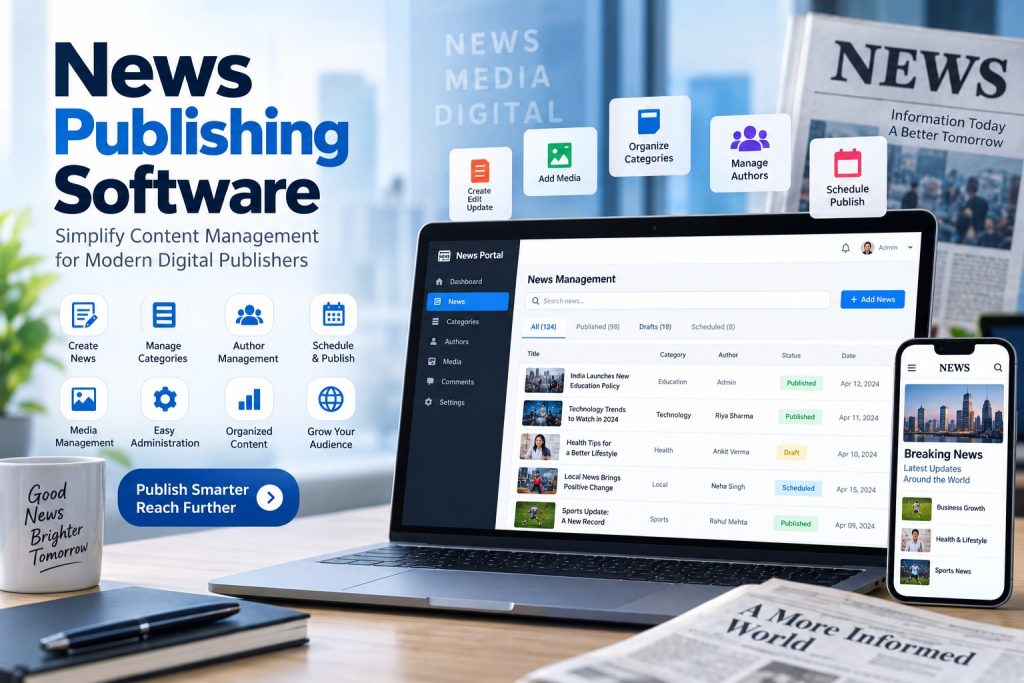
News Publishing Software: A Smarter Way to Manage Digital News The way people consume news has changed significantly. Today, readers expect fast updates, well-organized content, mobile-friendly websites, and reliable information. For publishers, however, managing a growing volume of news content can become challenging without the right technology. A modern News Publishing Software solution helps publishers simplify the entire publishing process. From creating and editing articles to organizing categories, managing authors, adding images, and publishing updates, the right software can bring everything into one centralized platform. Instead of managing news content through multiple tools, teams can use a dedicated digital publishing system to make their workflow faster and more organized. Whether you operate a local news website, digital media platform, organization website, community portal, or online publication, a structured publishing solution can make everyday content management much easier. In this guide, we will explore what news publishing software is, how it works, its key features, major benefits, and why it can be an important investment for modern digital publishers. What Is News Publishing Software? News Publishing Software is a digital platform designed to help publishers create, manage, organize, and publish news content on a website or digital platform. It provides a centralized environment where administrators, editors, writers, and content teams can manage different stages of the publishing process. A typical system can help users: As a result, publishers can spend less time handling repetitive administrative work and more time producing valuable content. A good News Content Management System should also be simple enough for everyday users. Therefore, an intuitive dashboard and well-organized controls are important parts of a successful publishing platform. Why Do Modern Publishers Need News Publishing Software? Publishing news is not limited to writing an article and clicking the publish button. A modern news website may handle dozens or even hundreds of articles, images, categories, authors, and updates. As the volume of content grows, manual management can become difficult. For example, a publishing team may need to: Managing all these tasks without a structured system can consume valuable time. A dedicated Online News Management System brings these activities together. Consequently, publishers can create a more consistent and efficient workflow. Key Features of News Publishing Software A professional publishing platform should provide features that support both content teams and administrators. Here are some of the most useful features to consider. 1. Easy News Creation The foundation of any publishing system is an easy-to-use news editor. Content teams should be able to create new articles without dealing with complicated technical processes. The system can provide fields for the headline, content, featured image, category, author, and other relevant information. A simple editor allows writers and editors to focus on the quality of their content instead of technical tasks. 2. News Editing and Updating News can change quickly. A story published in the morning may require an update later in the day. Therefore, News Publishing Software should make it easy to edit existing articles. Editors can update: This helps publishers keep their website accurate and up to date. 3. Category Management A growing news website needs a clear content structure. Categories allow readers to find the information they are interested in more easily. Depending on the publication, categories may include: A dedicated category management feature helps administrators create and organize these sections from one dashboard. 4. Featured Image Management Visual content plays an important role in digital publishing. A strong featured image can make an article more attractive when it appears on a homepage, category page, search result, or social media preview. A modern News Website Management Software solution should allow administrators to upload and manage featured images easily. This also helps maintain a consistent visual style across the website. 5. Author Management News websites often have multiple writers, reporters, editors, and contributors. Author management makes it easier to identify who created or published an article. Depending on the system, administrators can maintain author profiles and associate articles with the appropriate contributor. This creates better content organization and can also improve transparency for readers. 6. Draft and Published Content Management Not every article is ready to publish immediately. Sometimes an article needs editing, approval, additional information, or a final review. A structured publishing system can separate content into different stages, such as: This makes it easier for teams to understand which content is ready for readers and which content still needs attention. 7. Search and Filtering As a website’s content library grows, finding an older article can become difficult. A search and filtering system allows administrators to locate content quickly. For example, users may search by: This saves time and makes content administration more efficient. 8. Fast Content Publishing News publishing often depends on speed. When an important event happens, publishers need to share verified information quickly. A well-designed Online News Publishing System reduces unnecessary steps in the publishing workflow. With a centralized dashboard, editors can prepare and publish content without moving between multiple platforms. As a result, the publishing process becomes faster and more efficient. 9. Responsive Content Management Readers access news from different devices, including smartphones, tablets, laptops, and desktop computers. Therefore, modern digital publishing should consider mobile users from the beginning. A good Digital News Publishing Platform should support responsive website layouts so that published content can be displayed properly across different screen sizes. A mobile-friendly experience can make content easier to read and navigate. 10. Centralized Administration Managing content through one dashboard provides a major operational advantage. Instead of using separate systems for different publishing tasks, administrators can manage important content activities from one place. This centralized approach can help teams maintain: For growing publications, centralized administration can become especially valuable. Benefits of Using News Publishing Software The right software does more than publish articles. It can improve the overall publishing workflow and help organizations manage their digital presence more effectively. 1. Saves Time A structured publishing system reduces repetitive manual work. Editors can manage articles, categories, images, authors, and updates through a centralized interface. Therefore, teams can

News Publishing Software: A Smarter Way to Manage Digital News Read More »