Top Benefits of Technology for NGOs in the Digital Age
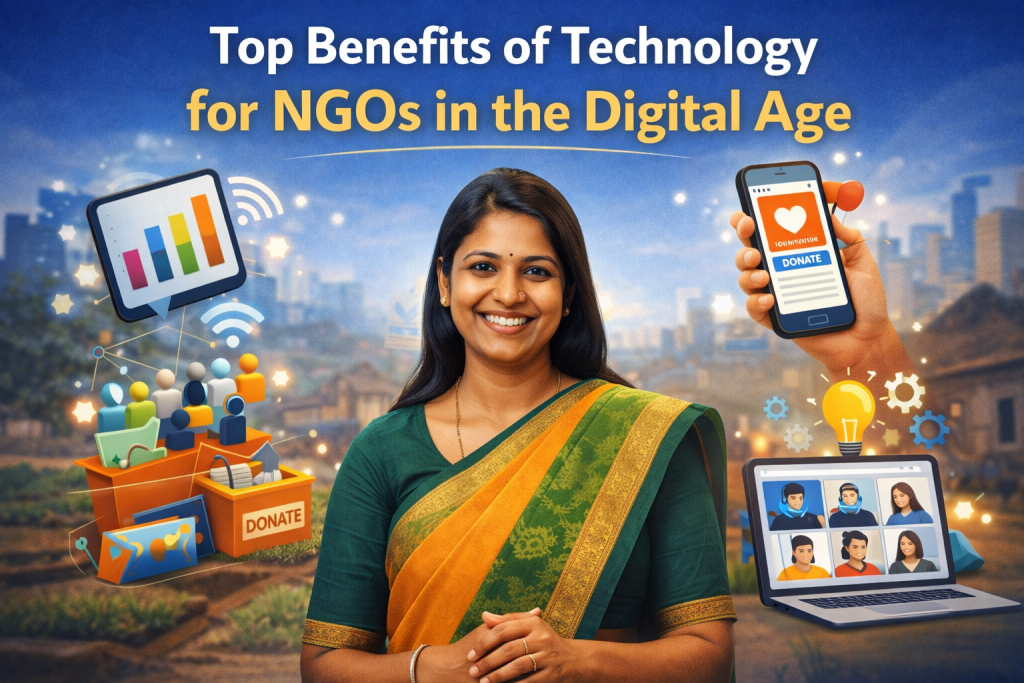
Top Benefits of Technology for NGOs in the Digital Age In 2026, the globe moves more quickly than ever before. The need for immediate coordinated responses to climate crises, geopolitical conflict, wealth disparity, and public health emergencies has pushed NGOs to the forefront. But simply being passionate and wanting to help others is no longer feasible. Technology will provide NGOs in 2026 with great advantages and will ultimately serve as the difference between an organization surviving and one that effectively expands its impact. Technology will affect how NGOs will raise money, work together, operate, and achieve results, and includes everything from engaging donors through A.I. to monitoring work done in the field through satellites. This guide identifies all of the major benefits of technology and outlines the relevant tools and trends and real-world applications for 2026. Why Technology Is Non-Negotiable for NGOs The nonprofit sector has changed dramatically. Donors today are more digitally sophisticated, more skeptical, and more demanding of proof than ever before. Governments and institutional funders require real-time data, audit trails, and measurable outcomes. Beneficiary communities increasingly expect digital-first service delivery. At the same time, NGOs are operating in a world of AI proliferation, automation, and hyper-connectivity. Organizations that have not yet embraced digital transformation are already falling behind — losing donors to tech-savvy competitors, struggling with manual inefficiencies, and failing to demonstrate impact in ways funders now expect as standard. The good news is that technology today is more accessible, affordable, and powerful than at any previous point in history. There has never been a better time for NGOs to go digital — and the rewards for doing so have never been greater. 1-AI-Powered Communication and Outreach The means of communicating have evolved rapidly from the early days of the digital age to today — in addition to being digital, today’s communication is also becoming intelligent. Just as AI has transformed the way NGOs use technology to expand their outreach, it has also supercharged the benefits for these organizations. Generative AI and Content Creation The use of tools like Claude, ChatGPT, and Gemini by an NGO’s communications department allows them to generate high-quality content for blogs, donor newsletters, grant proposals, annual reports, and social media in a fraction of the time that it took before AI. Now, a single staff member, with AI assistance, can perform the job of an entire communications department. Hyper-Personalized Email Marketing Campaigns AI-powered email marketing platforms are capable of doing much more than just segmenting your donor base by demographic traits. Nonprofits using platforms like ActiveCampaign and HubSpot for Nonprofits can now use predictive behavioral data to switch up messages based on what day and time a donor is most likely to open an email in order to increase the open rate, CTR, and Donation conversion rate. Short-form Video (and Reels) The single most effective organic outreach channel for NGOs to connect with supporters is through the use of short-form video on platforms like Instagram Reels, YouTube Shorts, and TikTok for Good. By consistently posting authentic 30–90 second impact videos, NGOs are building large communities of supporters without using any paid advertising typically needed to accomplish this. Voice (And Conversational) AI Many of the world’s leading NGOs are utilizing voice AI tools to provide donor thank you calls, check in with their volunteers, and 2-Next-Generation Digital Fundraising Fundraising methods have evolved tremendously within just the past few years. Technological advancements have had a profoundly positive impact on fundraising for non-profit organizations by providing access to revenue streams that had previously not been available to charitable groups run by prior generations of non-profit leaders. Many organizations are utilizing platforms such as Donorbox and Fundraise Up to generate personalized donation page layouts, suggested donation amounts, and messaging based upon information gathered from users. By using real-time artificial intelligence to tailor donation pages, these platforms have seen increasing rates of conversion. Given that cryptocurrency/digital currency donations made through platforms such as The Giving Block are rapidly becoming mainstream, non-profit organizations that accept donations of Bitcoin, Ethereum, and stablecoins are tapping into the next generation of wealthy individuals looking to donate. While many social media platforms such as Instagram and YouTube have created native donation buttons within their applications, non-profit organizations have found great success in soliciting donations directly through these forms of social media without directing donors to third-party applications. Organizations that use subscription-based donation models supported by automated tools are experiencing tremendous overall revenue growth. Unlike traditional fundraisers who relied upon one-time donations or collected funds from individual donors, these organizations benefit from having reliable sources of ongoing revenue that allows them to plan and budget for sustainable programs in the future. In addition to implementing contemporary methods for fundraising, an increasing number of professional organizations are relying on QR codes linked to instant donation pages from mobile phones in order to solicit donations at events, field locations, and through printed materials. Professional NGO organizations have mostly phased out of using cash as a means of collecting donations. 3. Real-Time Data Management and Advanced Impact Measurement The foundation upon which all NGOs rely when producing credible, accurate work is undoubtably based upon data. Funders no longer accept just anecdotal evidence as reason to provide funds; they want to see dashboards, data pipelines and verified metrics regarding each organization’s impact in order to support continued funding. Access to this type of information is among the most significant benefits technology has given NGOs to date. AI-Driven Customer Relationship Management and Donor Intelligence Modern CRMs for nonprofits have AI functionality built in — such as Salesforce Nonprofit, Bloomerang — that give nonprofits the ability to automatically score their donors (how likely they are to give), predict their churn risk, recommend the “best” ask amount, and flag potential relationship risks — thus giving NGOs a real strategic advantage in succeeding with fund development. Mobile First Data Collection in the Field KoBoToolbox, ODK and CommCare are enabling field staff who may be working in some of the most
Top Benefits of Technology for NGOs in the Digital Age Read More »